
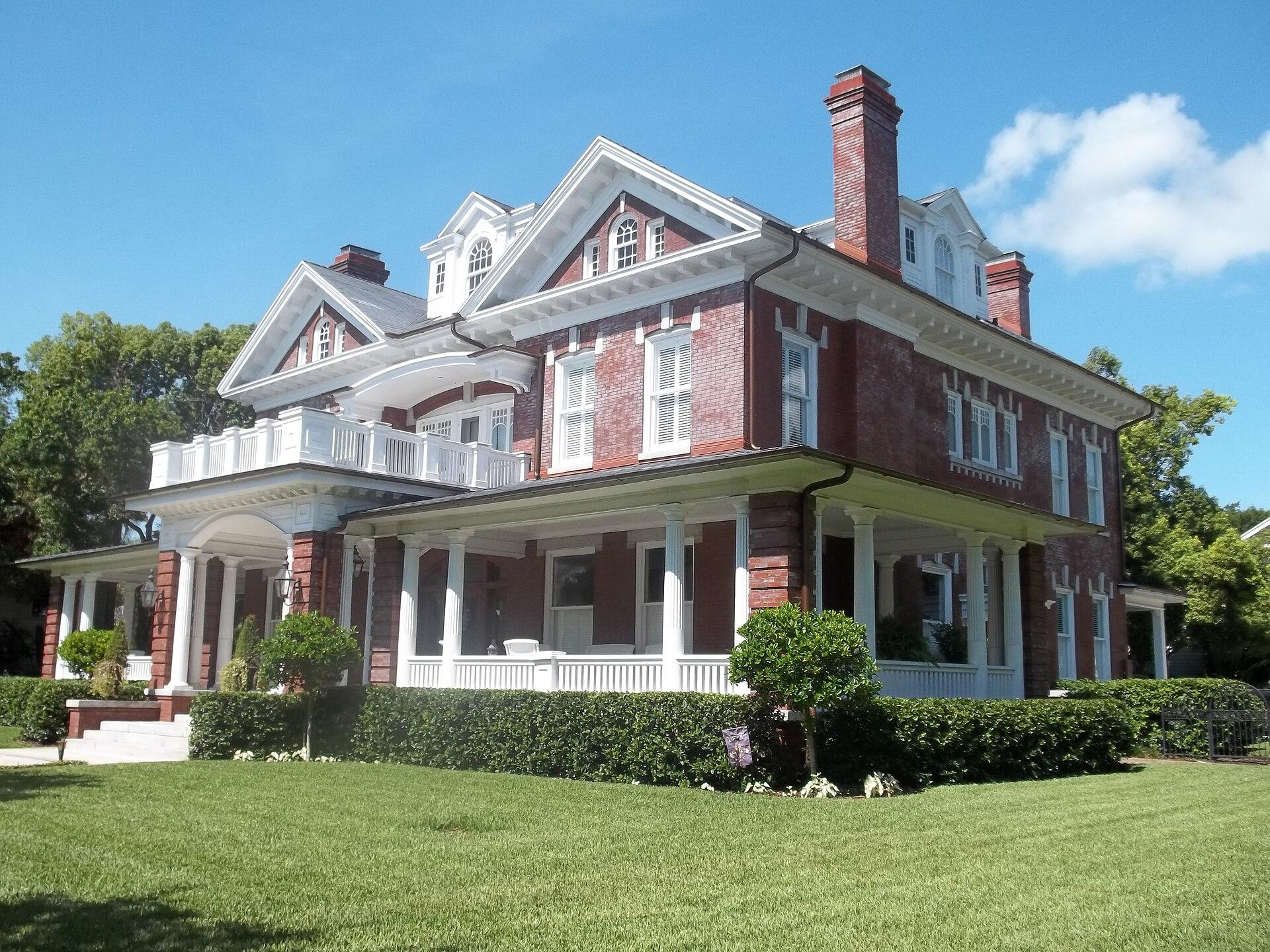
The local guide
South Tampa
A peninsula roughly seven miles long, water on both sides, downtown at the top and an air force base at the tip. Almost everything that makes this area what it is follows from that shape.
Ebyabe · CC BY-SA 3.0
The shape of it
Water on both sides changes everything
South Tampa is the peninsula running south from downtown Tampa. Hillsborough Bay is on the east side; Old Tampa Bay is on the west. Because the land is narrow, you are rarely more than a couple of miles from water in one direction or the other, and the roads that matter run north to south.
That geometry is why the area behaves like a set of parallel corridors rather than a grid of interchangeable neighborhoods. Bayshore Boulevard runs the eastern waterfront. Dale Mabry Highway runs down the middle and carries most of the commercial traffic. Westshore Boulevard and the streets west of it face Old Tampa Bay and the airport. Which corridor a house sits on tells you more about daily life there than its square footage does.
The southern tip is occupied by MacDill Air Force Base, which is one reason the peninsula ends where it does rather than continuing into a further ring of development. There is one way in and one way out by land.
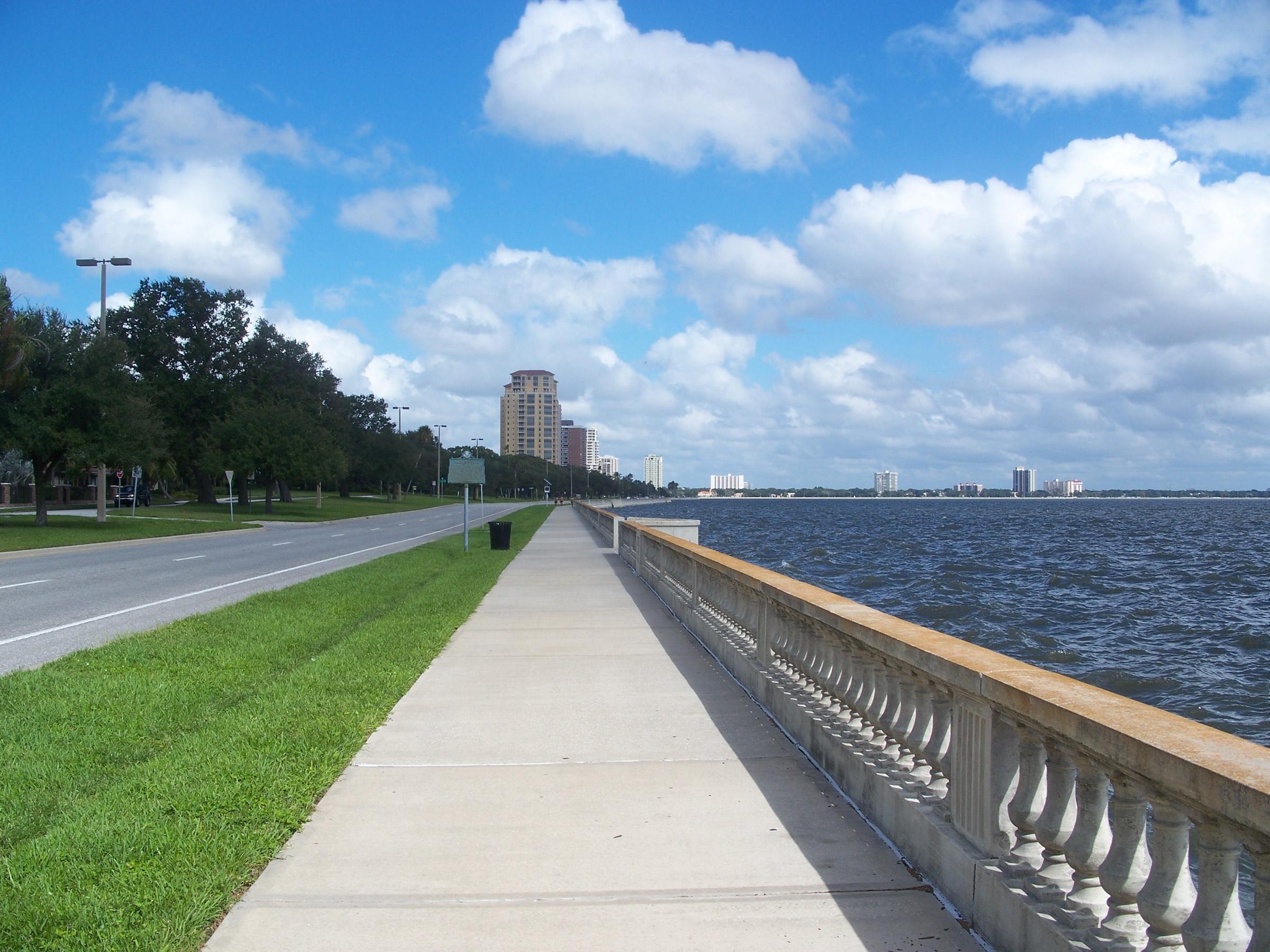
Bayshore Boulevard
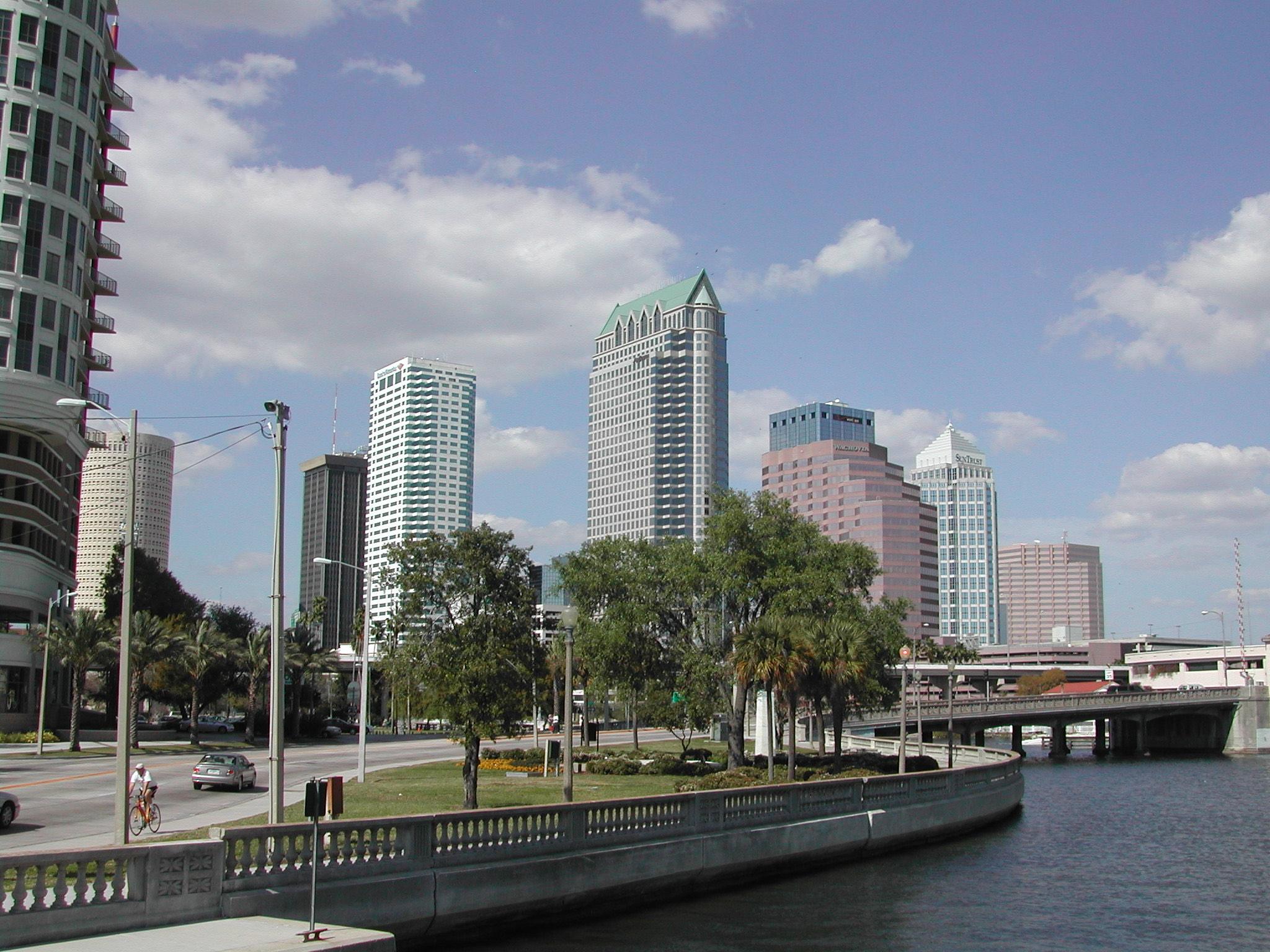
Roughly four and a half miles of continuous sidewalk along a seawall, with a concrete balustrade between the walkway and Hillsborough Bay.
Bayshore is South Tampa's waterfront spine and its most recognizable address. The waterfront side is a linear public promenade used all day; the inland side runs from large early-twentieth-century houses through mid-century construction to newer replacement homes and a stretch of condominium towers nearer downtown. Streets immediately behind Bayshore trade the view for the same access and a quieter street.
Ebyabe · CC BY 2.5
Housing fabric
Four building eras on the same block
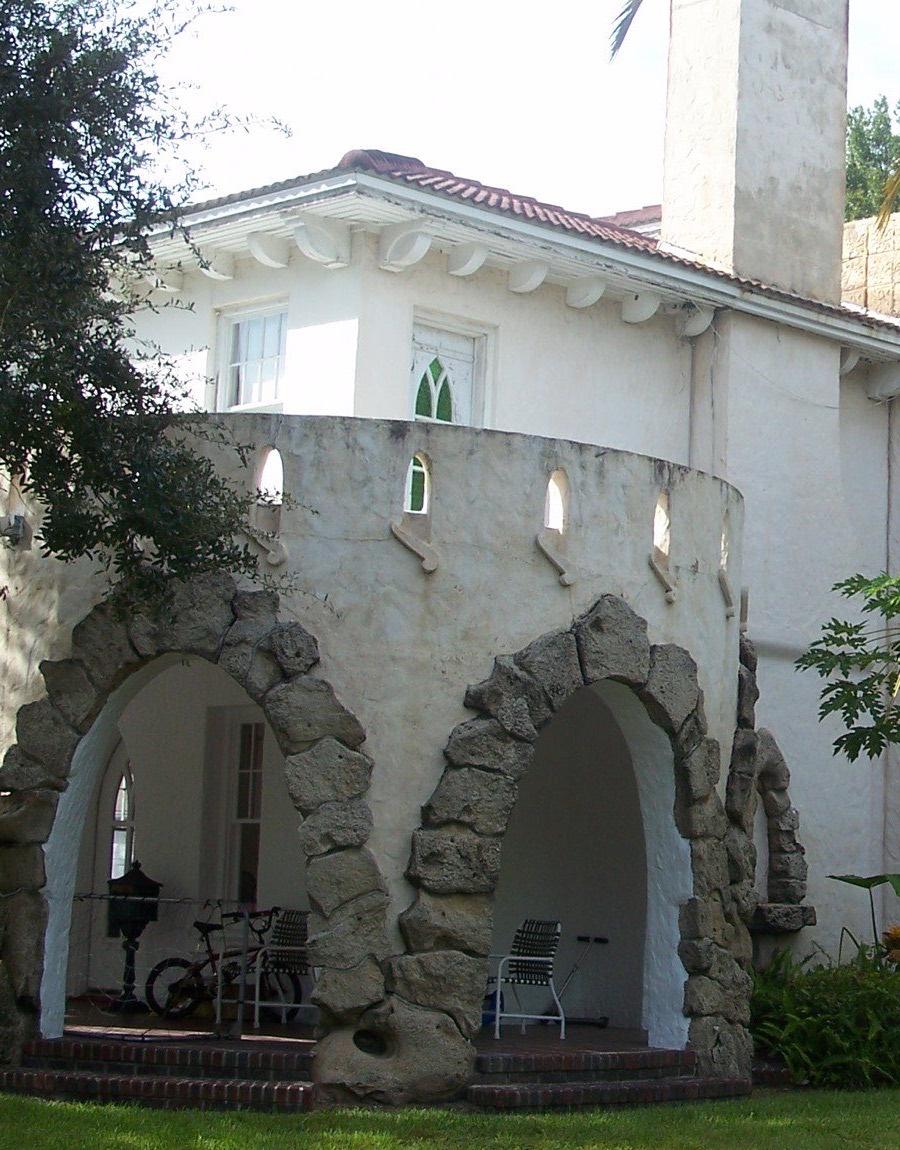
South Tampa was built out in waves and never fully redeveloped, so the eras sit side by side. The 1920s left bungalows and Mediterranean Revival houses in stucco with clay tile roofs, concentrated in Hyde Park, Davis Islands, and pockets of Palma Ceia. The post-war decades added ranch houses on wider lots. From the 1990s onward, teardown and replacement construction added two-story homes on those same lots, which is why an original 1925 house and a 2022 house are often neighbors.
The practical consequence for a buyer is that condition, systems, and construction era vary enormously within a single street, and price per square foot is close to meaningless as a comparison tool here. Two houses a block apart can be different products entirely.
Waterfront, water-access, golf-adjacent, and interior blocks also sit much closer together than they do in most markets. On a map they look the same. On the street and in the price they are not.
Named places
A closer look at South Tampa
- Hyde ParkThe northern end, closest to downtown, containing one of the city's oldest residential districts along with Hyde Park Village and the South Howard Avenue commercial strip. Predominantly early-twentieth-century houses on smaller lots, with a walkable street pattern that is unusual for Tampa.Read the Hyde Park guide
- Davis IslandsTwo dredged islands off the northeast side, reached by one road crossing at the north end, with a 1920s Mediterranean Revival core, a village-scale commercial street, a public marina, and a small municipal airport.Read the Davis Islands guide
- Palma CeiaCentral South Tampa, organized around a golf course, with a mix of 1920s houses, mid-century construction, and substantial recent replacement building. Bay to Bay Boulevard is its commercial spine.Read the Palma Ceia guide
- Bayshore BeautifulThe blocks directly inland from the southern stretch of Bayshore Boulevard. Access to the promenade without the boulevard frontage.
- Beach Park and Sunset ParkThe western side, facing Old Tampa Bay, with canal-front and bay-front streets, larger lots than the eastern neighborhoods, and the shortest drive to Tampa International.
- Culbreath IslesA gated waterfront enclave on the western shore, largely water-access lots with deepwater frontage.
- Virginia Park and Bel MarInterior blocks on a regular grid, built mostly with mid-century houses on similar lots, now with steady replacement construction on those same lots.
- Ballast PointThe southeastern end, with a public park and fishing pier on Hillsborough Bay and a long view back to the downtown skyline.
- Port Tampa CityThe southwestern end, north of MacDill Air Force Base with the bay along its western edge. It was established as a port town at the end of Henry Plant's railroad and annexed by Tampa in 1961, and the housing mix still reads differently from the older neighborhoods nearer Bayshore and Hyde Park: smaller original cottages and mid-century houses on a compact grid, alongside substantial recent infill.
Access
Getting off the peninsula, and how long it really takes
- Downtown TampaImmediately north. From most of South Tampa it is a short drive, and from Hyde Park it is close enough to walk or cycle.
- Tampa InternationalNorthwest, on the mainland across the water from the western edge of South Tampa. From the Beach Park side it is a genuinely short run; from the southeast end it is not.
- The Pinellas sideThe Gandy Bridge crosses from the southwest corner to St. Petersburg. The Howard Frankland, further north, carries the interstate.
- East Hillsborough and the interstatesThe Lee Roy Selmon Expressway runs along the northern edge and connects to Brandon and the interstate system.
Before you buy here
Questions that are property-specific, not area-specific
On a low-lying coastal peninsula, elevation, flood zone designation, insurance history, seawall and dock condition, and the age of the roof and mechanical systems vary house by house and materially affect the cost of ownership. Ashley raises them at the start and coordinates the licensed specialists who answer them — surveyors, inspectors, insurance agents, and lenders. She does not provide those opinions herself, and no general statement about an area is a substitute for the documents on a specific property.
South Tampa
Selling here, or trying to buy here
Ashley lives in South Tampa and knows these neighborhoods firsthand. If you already own here, a Private Home Strategy Review is the place to start. If you are trying to get in, an hour working out which corridor actually suits you will save you months of touring the wrong houses.