
South Tampa neighborhood guide
Hyde Park
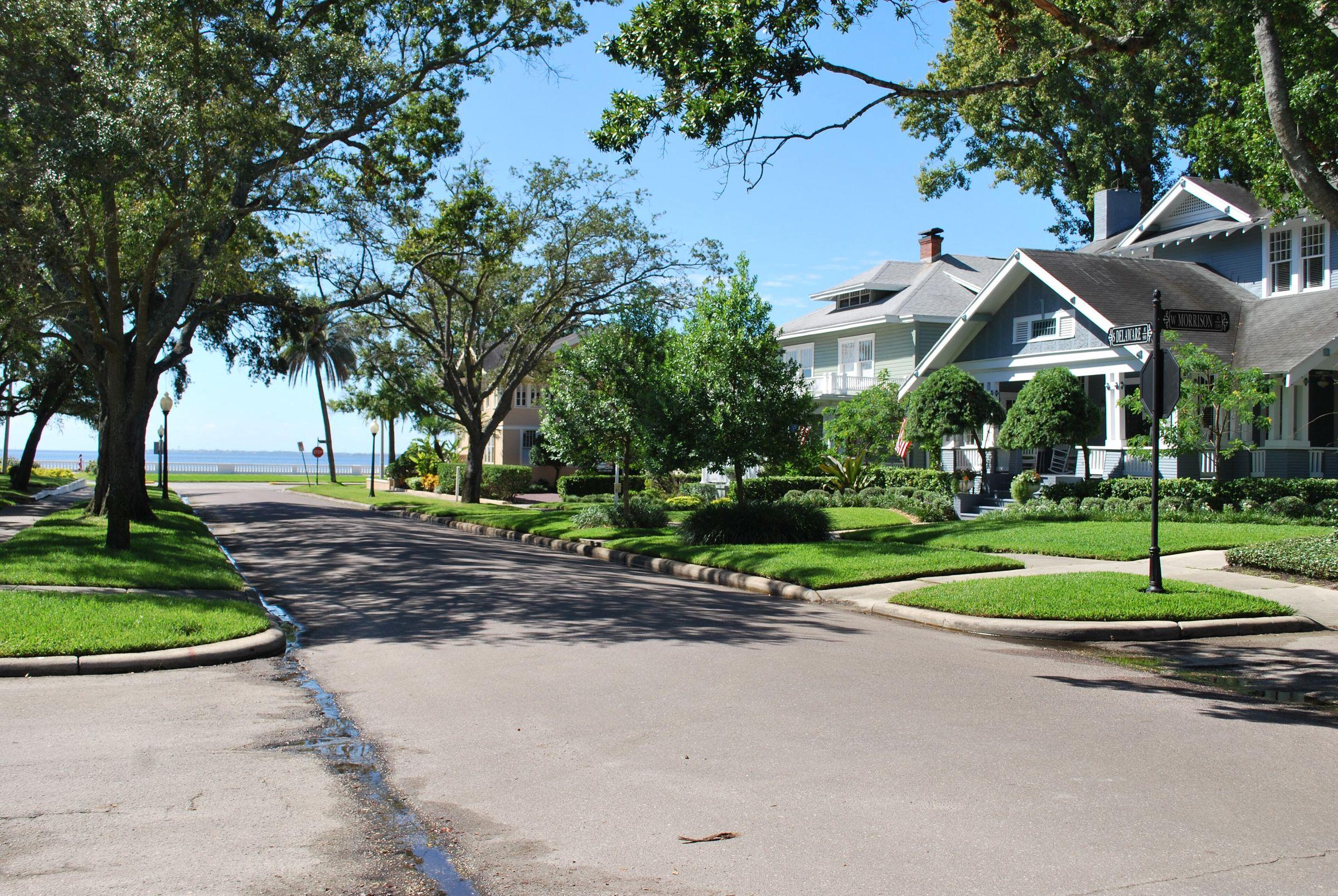
Tampa's oldest surviving neighborhood, directly across the Hillsborough River from downtown. Laid out in small subdivisions between 1886 and the 1920s, and still largely standing.
MarieG33 · CC BY-SA 3.0
Where it sits
Across the river from downtown, down to the bay
Hyde Park sits on the west bank of the Hillsborough River, where the river opens into Hillsborough Bay. At its widest, the National Register historic district runs from Kennedy Boulevard south to the bay and from the river west to Howard Avenue. Bayshore Boulevard runs along its southern edge.
Three bridges cross to downtown: Kennedy Boulevard, Platt Street, and Brorein Street. The Lee Roy Selmon Expressway cuts through the middle from east to west, so the neighborhood reads as two parts, and a few blocks that look close on a map are an indirect drive.
Most streets keep to a regular grid. Near the water they bend to follow the angle of Bayshore.
Bayshore Boulevard
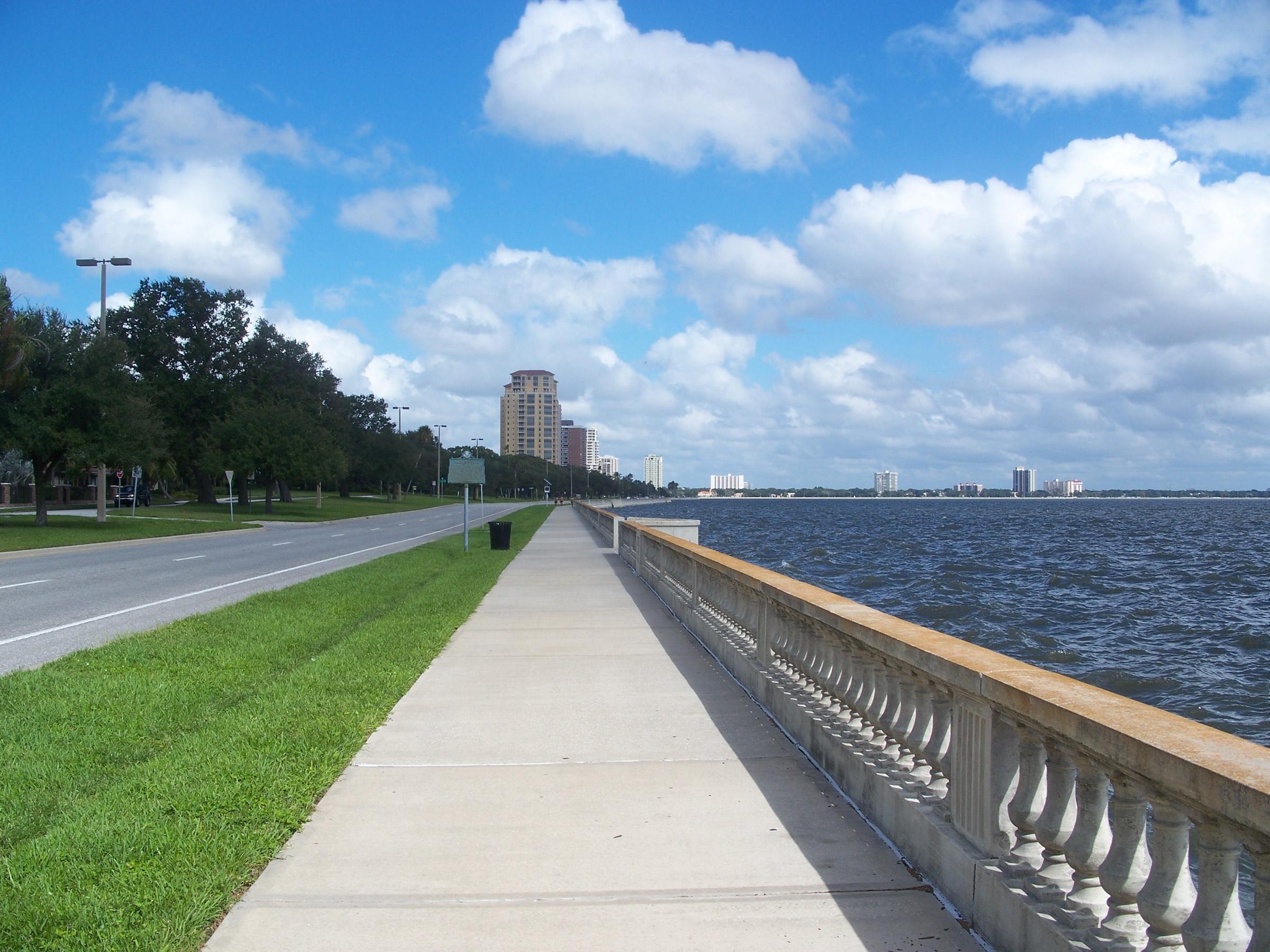
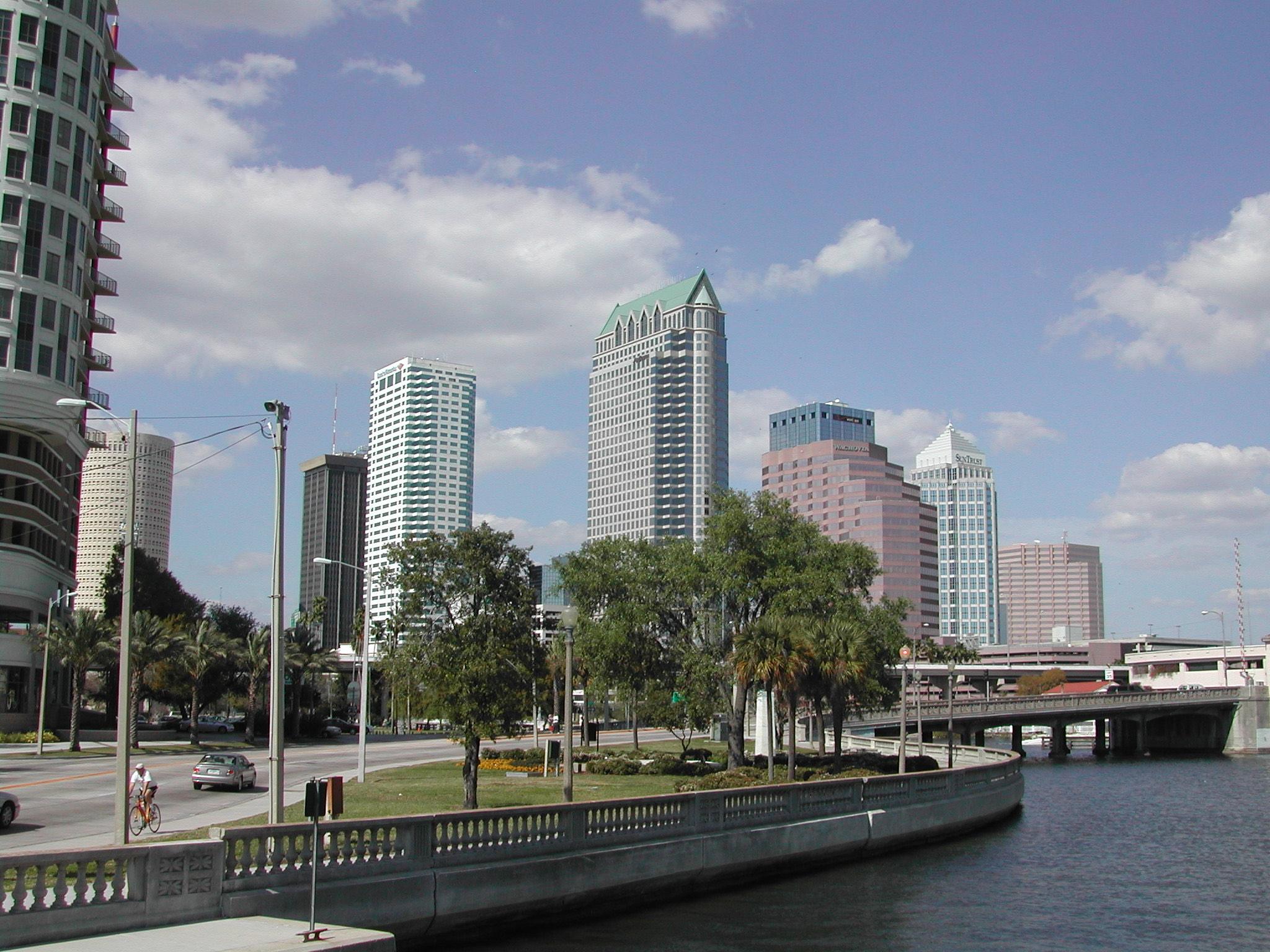
Hyde Park's southern edge is the north end of Bayshore: the seawall, the balustrade, and the continuous sidewalk along Hillsborough Bay.
From here the promenade runs south for roughly four and a half miles, and the southern streets of the neighborhood end at it.
Ebyabe · CC BY 2.5
How it was built
A collection of small subdivisions, not one plan
Development began in 1886, when O.H. Platt bought 20 acres from the Robert Jackson homestead, divided it into lots, and named it Hyde Park after his hometown in Illinois. Other small subdivisions followed into the mid-1920s, each platted separately, and together they make up the neighborhood.
Growth followed the crossings. The first bridge over the river opened at Lafayette Street, now Kennedy Boulevard, in 1888, the same year Henry B. Plant began his Tampa Bay Hotel just to the north. The hotel opened in 1891 and is now the University of Tampa. Streetcars ran along Swann and Rome avenues as early as 1892. The present Kennedy Boulevard bridge, a bascule span from 1913, is the oldest of its type in Florida.
The citrus groves of William A. Morrison and James M. Watrous were subdivided by 1910, and West Hyde Park followed in 1914. Morrison and Watrous avenues still carry the grove owners' names.
The neighborhood was listed on the National Register of Historic Places in 1985. The City of Tampa designated it a local historic district in 1988 and expanded the district in 2023; it now covers about 600 acres.
- 1886
- O.H. Platt buys 20 acres and names them Hyde Park.
- 1888
- The first bridge opens at Lafayette Street, now Kennedy Boulevard.
- 1891
- Plant's Tampa Bay Hotel opens; it is now the University of Tampa.
- 1913
- The present Kennedy Boulevard bridge, Florida's oldest bascule span.
- 1985
- Listed on the National Register of Historic Places.
- 1988
- Designated a local historic district, expanded in 2023 to about 600 acres.
Housing fabric
Wood frame, deep porches, and brick underfoot
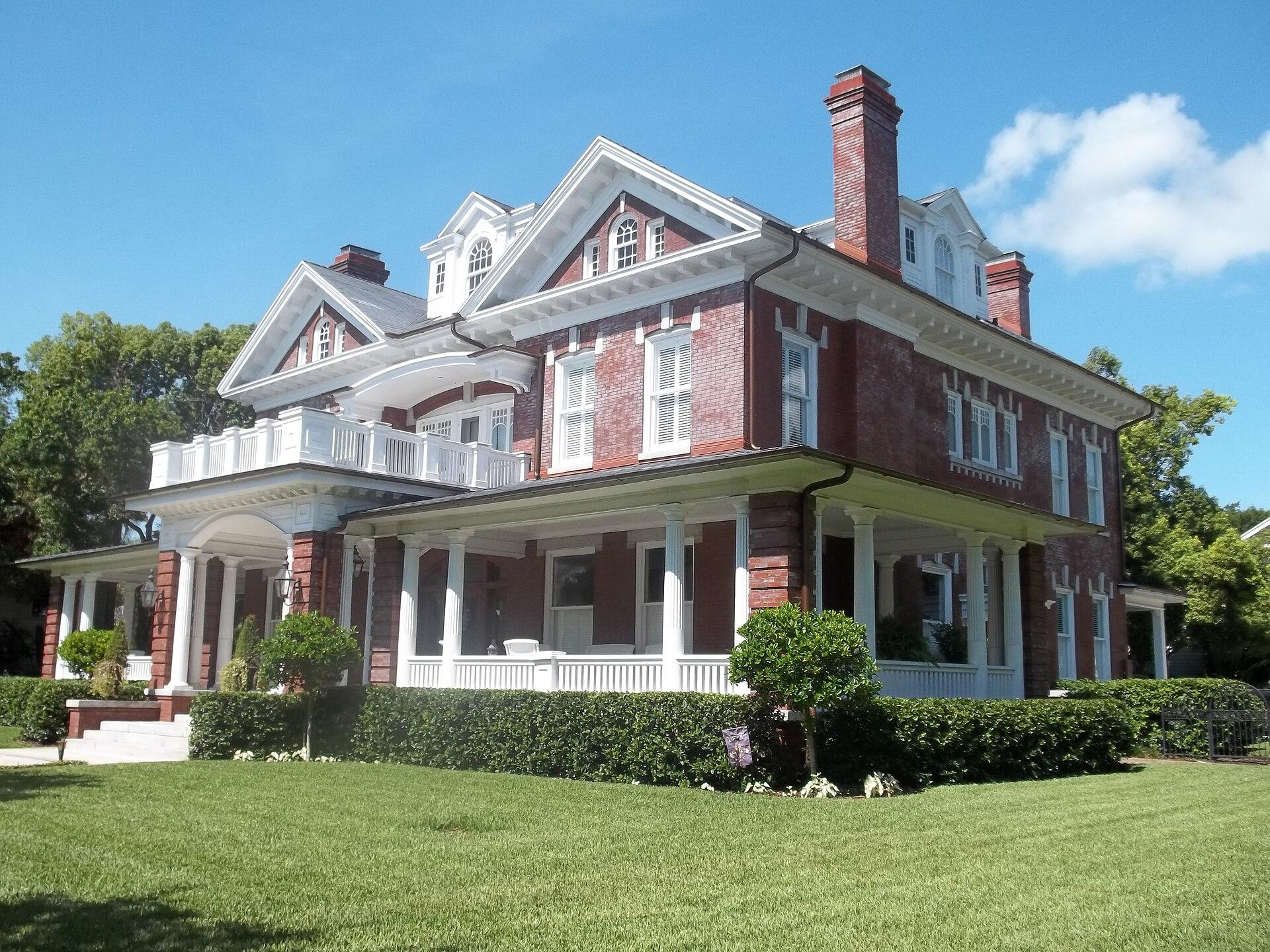
Most of the historic houses are wood frame, built between the 1880s and the early 1930s: revival styles, bungalows, and vernacular cottages, ranging from shotgun houses to masonry mansions. Apartment buildings from the 1910s and 1920s stand among them, and newer houses and townhouses fill lots where older buildings were lost.
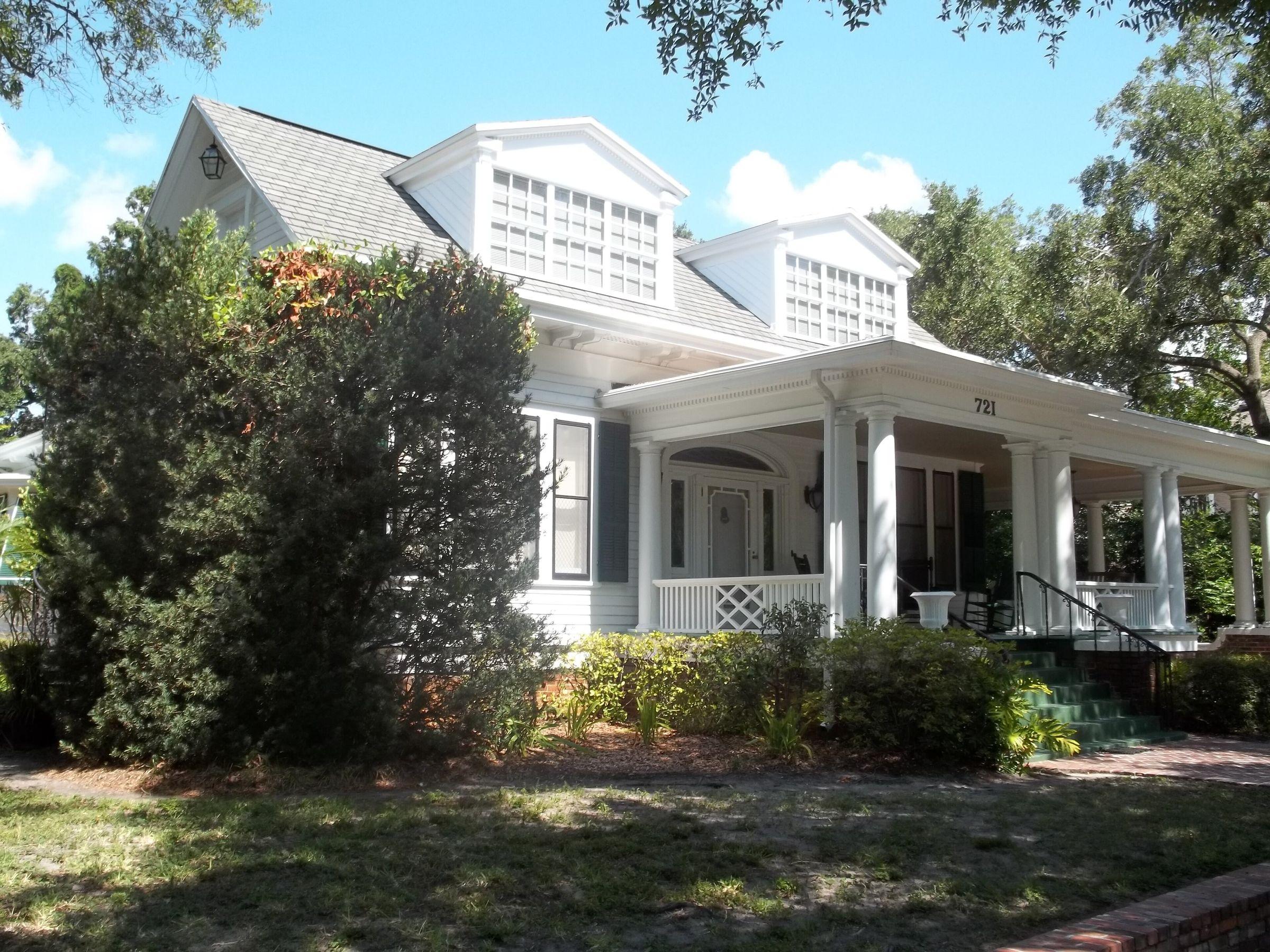
Many streets still have their original brick or asphalt-block paving and granite curbs, and older sidewalks carry their contractors' stamps. Large shade trees line most blocks.
Inside the local historic district, exterior changes, additions, new construction, and demolition go through the City's Architectural Review Commission under the district's design guidelines. A plan to renovate, add on, or rebuild should start with what those guidelines allow.
Named places
A closer look at Hyde Park
- Hyde Park VillageOpen-air shops and restaurants on Swann Avenue and the blocks around Snow and Dakota avenues. Some of the brick buildings date to 1905; the village opened as a planned center in 1985.
- South Howard AvenueThe restaurant and bar strip along Howard Avenue at the neighborhood's western edge, known locally as SoHo.
- Kate Jackson ParkA city park and community center at Rome and Morrison avenues, on the site of Kate Jackson's home. She campaigned for public parks and recreation for Tampa's children, and the property was renamed for her in 1975. The lion fountain on the corner dates from City improvements in the late 1990s.
- Bungalow TerraceA single block bounded by Swann, Rome, Inman, and Packwood avenues, laid out in 1915 with nineteen bungalows facing each other across a pedestrian lane instead of a street.
- The University of TampaJust north across Kennedy Boulevard, in Henry Plant's 1891 Tampa Bay Hotel, with its silver minarets.
- Bayshore BoulevardThe southern edge, where the waterfront promenade begins and runs south along Hillsborough Bay.
Access
Getting around from here
- Downtown TampaDirectly east across the river. Close enough that many trips are a walk or a bike ride rather than a drive.
- Davis IslandsOne bridge away, from the north end of Bayshore at the neighborhood's southeast corner.
- The Selmon ExpresswayRuns through the neighborhood, west toward the Gandy Bridge and east toward Brandon and the interstates.
- Tampa InternationalNorthwest across the city. Kennedy Boulevard runs most of the way to the Westshore district beside the airport.
Before you buy here
Questions that are property-specific
Historic designation, the age of a house's wiring, plumbing, and foundation, and what a renovation would need from the Architectural Review Commission all vary house by house. So do elevation and flood zone on the blocks nearest the bay. Ashley raises them at the start and coordinates the people who answer them — inspectors, surveyors, insurance agents, lenders, and the City's historic preservation staff. She does not give those opinions herself.
More of South Tampa
- South TampaThe wider guide: the two bays, Bayshore, and the corridors.
- Davis IslandsTwo islands built from the floor of Hillsborough Bay in the 1920s land boom, at the mouth of the Hillsborough River, with one road crossing to the mainland at the foot of Bayshore Boulevard.
- Palma CeiaCentral South Tampa, between Dale Mabry Highway and the Selmon Expressway. Founded in 1903, home to a private golf club since 1916, and still laid out on its original Spanish-named streets.
Hyde Park
Selling here, or trying to buy here
Ashley lives in South Tampa and knows these streets firsthand. If you already own in Hyde Park, a Private Home Strategy Review is the place to start. If you are trying to buy here, a conversation about which blocks and which kinds of house suit you will save weeks of touring.